
You know what’s funny? Five years ago, if someone mentioned fiber optic cabling for security cameras, I’d immediately think “overkill” and “way too expensive.” Now? I’m installing fiber for about 30% of my commercial jobs around Philadelphia, and sometimes even for larger residential properties.
The turning point for me was this massive warehouse job I did near the airport. The client had tried copper cabling twice before with different installers, and both times the system failed miserably. Signal degradation, interference issues, the works. Three weeks after I installed the fiber optic backbone, the owner called me up just to say “I should have done this from day one.”
But here’s the thing – fiber isn’t always the answer. Sometimes it’s absolutely necessary, sometimes it’s smart future-proofing, and sometimes it’s just burning money for no good reason. Let me walk you through when it makes sense and when you’re better off sticking with good old copper.
What Actually Is Fiber Optic Cabling?
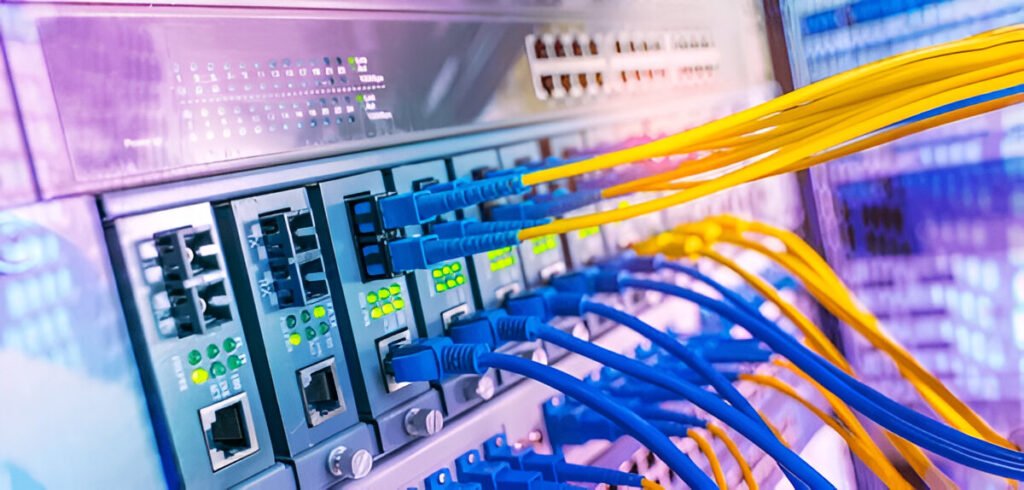
Instead of sending electrical signals through copper wire like regular ethernet, fiber optic cables use light pulses through glass strands. Sounds fancy, right? It is, but it’s also incredibly practical for certain situations.
Think of it like the difference between shouting across a crowded room versus using a laser pointer. The shouting (copper) works fine for short distances and small crowds, but in a massive space with lots of interference, you need something more precise.
I remember the first time I actually saw fiber being installed – this tech guy was running cables that looked impossibly thin compared to the thick ethernet cables I was used to. But those thin cables were carrying way more data with zero signal loss.
When Fiber Actually Makes Sense
Large Properties Where Distance Kills Copper
Copper ethernet starts having problems around 300 feet. You can use repeaters and switches, but that’s more equipment to maintain and more potential failure points.
I did this industrial complex in North Philly last year – main office to the far warehouse was about 800 feet. With copper, I would have needed multiple switches and still might have had signal issues. Fiber? One clean run, perfect signal quality.
Places With Serious Electrical Interference
Ever try to get a clear radio station while driving under power lines? That’s what happens to copper cables around heavy electrical equipment.
Had a client with a manufacturing facility – massive motors, welders, all kinds of electrical noise. Their previous wired security camera installation was a disaster because of interference. Fiber completely eliminated those problems since light doesn’t care about electromagnetic fields.
When You Need Bandwidth That Copper Can’t Handle
Here’s where things get interesting for high-definition wired cameras. A single 4K camera can push 20-30 Mbps. Multiply that by 20 cameras, and you’re looking at serious bandwidth requirements.
Did a retail complex in King of Prussia with 35 cameras – mix of 4K and high-speed PTZ units. Copper would have been a bottleneck nightmare. Fiber handled everything without breaking a sweat.
Future-Proofing for Technology That Doesn’t Exist Yet
This one’s harder to justify cost-wise, but I’ve seen it pay off. Technology moves fast, and what seems like overkill today might be standard tomorrow.
One of my commercial clients installed fiber three years ago for their current system. Last month, they upgraded to some new AI-powered cameras that analyze footage in real-time. Good thing they had the bandwidth to handle it.
When Fiber Is Probably Overkill
Small Residential Installations
If you’re doing a basic home wired security camera system with 4-8 cameras, fiber is like buying a Ferrari to drive to the corner store. Cat6 copper will handle everything you need for way less money.
I had a homeowner in Chestnut Hill who insisted on fiber for his 6-camera setup because his neighbor had it. I talked him out of it and saved him about $3,000. His system works perfectly with Cat6.
Short Cable Runs
Under 200 feet with minimal interference? Copper is fine. I only start thinking about fiber when distance or environment becomes a real issue.
Budget-Constrained Projects
Let’s be honest – fiber costs more. Equipment costs more, installation costs more, and if something breaks, repairs cost more. If the budget is tight, spend money on better cameras and stick with quality copper cabling.
The Real Costs of Fiber
Initial Installation
Fiber cable itself isn’t that much more expensive than good copper, but the equipment costs add up fast. Fiber switches, media converters, and specialized tools for termination – it all costs more.
A typical residential wired surveillance camera setup might cost $2,000-4,000 for cabling. Add fiber, and you’re looking at $4,000-8,000 just for the network infrastructure.
Specialized Installation Requirements
You can’t just twist fiber cables together like copper. Terminating fiber requires special equipment and training. Not every installer can do it properly, which limits your options and often increases labor costs.
I invested in fiber termination equipment about three years ago. The learning curve was steep, but now I can handle the whole installation myself instead of subcontracting that part.
Ongoing Maintenance
Fiber is actually more reliable than copper once it’s installed properly, but when something does go wrong, it’s usually more expensive to fix.
Accidentally damage a copper cable during renovation? Easy repair. Damage fiber? You’re looking at specialized equipment and potentially replacing the entire run.
Mixed Systems – Getting the Best of Both Worlds
Here’s what I do for a lot of larger installations – fiber backbone with copper distribution. Run fiber for the main trunk lines where you need the bandwidth and distance, then use copper for the final connections to individual cameras.
Perfect example – this office building in Center City had multiple floors with cameras on each level. Fiber backbone from the main equipment room to switches on each floor, then Cat6 to individual cameras.
This approach gives you the performance benefits of fiber where you need them while keeping costs reasonable for the local connections.
Installation Considerations for Philadelphia Properties
Older Building Challenges
Philly’s got a lot of old buildings, and running any kind of cable can be tricky. Fiber is actually sometimes easier because the cables are smaller and more flexible than heavy copper bundles.
But you need proper protection – fiber is more delicate than copper and doesn’t handle being bent sharply or crushed.
Weather and Environmental Factors
Our climate can be rough on outdoor installations. The good news is that fiber itself is immune to corrosion and moisture problems that can affect copper connections.
The bad news is that fiber equipment is often more sensitive to temperature extremes. Need proper environmental control for switches and converters.
Code and Permit Requirements
Some commercial installations require specific types of cable for fire safety reasons. Plenum-rated fiber costs more but might be required for certain building types.
Always check local requirements before planning your installation. I’ve had jobs where we had to switch cable types mid-project because of code issues.
Making the Decision
Questions I Ask Every Client
How many cameras are you planning now, and how many might you add later? What’s the maximum distance from your equipment room to the farthest camera? What kind of environment will the cables run through? What’s your total budget for the project?
These answers usually make the choice pretty clear.
Red Flags That Suggest You Need Fiber
If you’re planning more than 20 high-definition cameras, if your cable runs exceed 250 feet, if you’re in an electrically noisy environment, or if you’re planning significant future expansion – fiber starts making sense.
Green Lights for Staying With Copper
Small camera count, short distances, clean electrical environment, tight budget – stick with quality copper and spend the money on better cameras or additional coverage.
Working With Installers
Make Sure They Actually Know Fiber
Not every security camera installer can properly work with fiber. Ask to see examples of previous fiber installations. If they can’t show you proper terminations and testing results, find someone else.
Understand the Warranty Implications
Fiber installations should come with performance testing documentation. If your installer can’t provide signal loss measurements and bandwidth testing, that’s a red flag.
Plan for Service and Support
Make sure whoever installs your system can also service it later. Finding someone to troubleshoot fiber issues at 2 AM on a Sunday is harder than finding copper repair services.
The Bottom Line
Fiber optic cabling for security cameras isn’t about being high-tech for the sake of it. It’s about solving specific problems that copper can’t handle effectively.
For large commercial properties, long cable runs, or electrically noisy environments, fiber often pays for itself through improved reliability and performance. For smaller installations or budget-conscious projects, quality copper cabling is usually the smarter choice.
The key is honest assessment of your actual needs versus your budget. Don’t let anyone talk you into fiber just because it sounds impressive, but don’t dismiss it if your situation actually calls for it.
Real World Advice
I’ve been doing this long enough to know that every installation is different. What works perfectly for one client might be completely wrong for another.
If you’re on the fence about fiber, start by getting quotes for both approaches. Sometimes the cost difference is smaller than you’d expect, especially for larger installations. Other times, copper is clearly the way to go.
The most important thing is working with someone who understands both technologies and can give you honest advice based on your specific situation, not just whatever they happen to specialize in.
Need help deciding what’s right for your property?
I’m Robert from Mi5 Security, and I’ve installed both copper and fiber systems all over the Philadelphia area. Whether you need a simple residential wired surveillance camera setup or a complex commercial installation, I’ll give you straight talk about what actually makes sense for your situation.
Call me at (610) 633-6364 or email robertpjonesjr@yahoo.com. I’ll take a look at your property and explain your options without the sales pitch – just honest advice about what will work best for your needs and budget.


